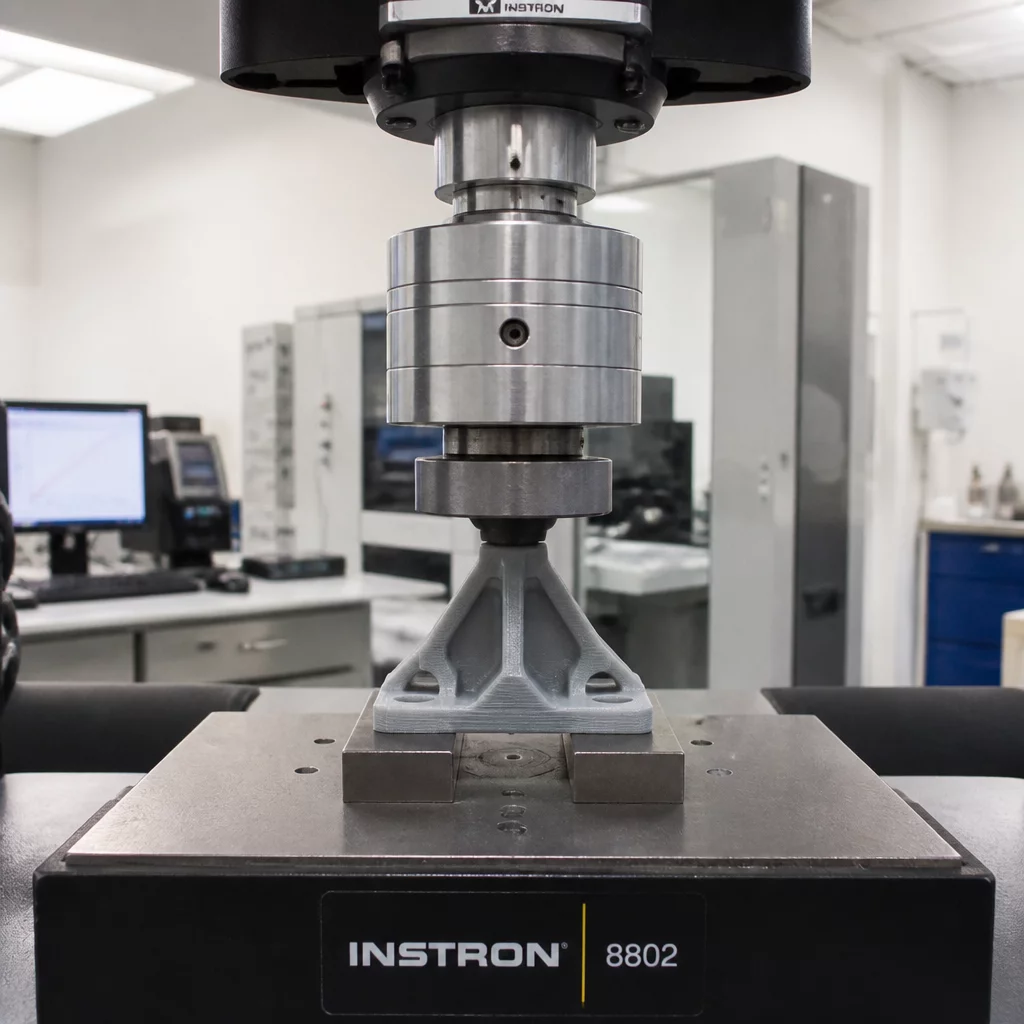
Establishing clear load thresholds, layer adhesion parameters, and post-curing requirements to ensure your printed parts hold up under stress.
A solid understanding of structural integrity starts long before the resin tank is filled. When UV light cures liquid monomer layer by layer, the resulting bonds determine whether a component will endure real-world forces or crack under minimal stress. Delamination, micro-cracks, and internal voids represent the most frequent structural failure modes in photopolymer printing.
To evaluate these weaknesses, check the interlayer adhesion first. Brittle resins often show clean breaks along layer boundaries, whereas tough or flexible formulations tend to deform before failing. When parts must bear mechanical loads, design them with proper orientation in CHITUBOX to distribute stress away from the layer lines.
Post-processing plays an equally vital role. Uncured liquid trapped inside hollow cavities will slowly degrade the surrounding solid walls, eventually causing the model to rupture from internal pressure. Always drain hollowed prints completely, rinse the inner chambers thoroughly, and ensure UV light reaches all internal surfaces. If thermal stability is required, use high-performance resins like Tethon 3D C-Lite which can sustain properties up to 225 °C. Otherwise, standard materials will soften and lose their load-bearing capacity as temperature increases.
Core Evaluation Objectives
Establishing criteria prior to printing prevents subjective rejection loopbacks. When using unified slicers like CHITUBOX v3.1.0 (or basic editions), clear threshold parameters must align directly with the material characteristics. For instance, high-temperature formulations like Tethon 3D C-Lite require adjusted tolerances due to thermal expansion profiles up to 225 °C.
- Always perform dimensional calibration before batch inspection.
- Maintain uniform post-curing UV distribution to ensure physical integrity.
- Track feature deviations against structural limits defined below.